 Sourcing VIP
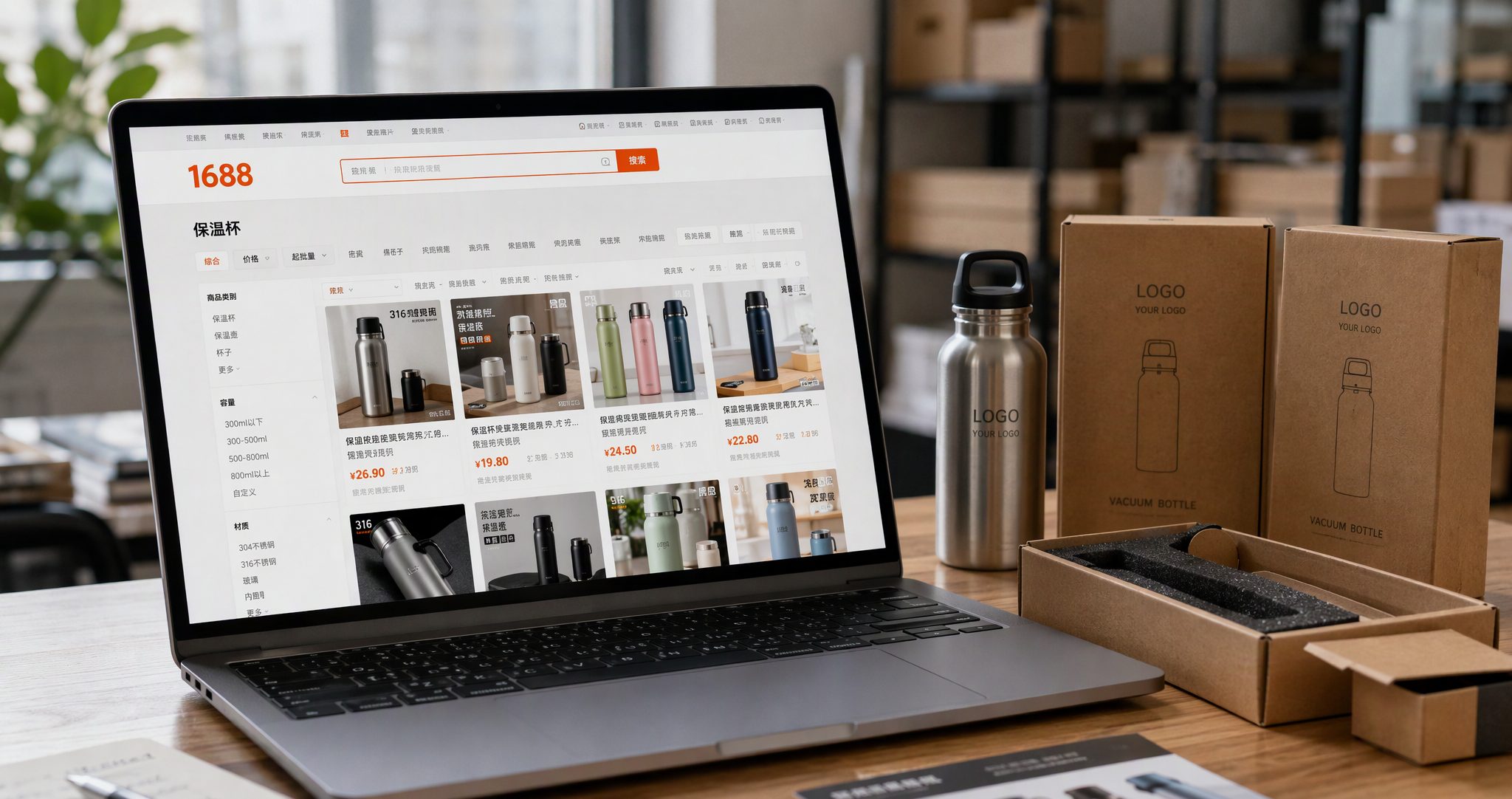
If you've sourced from China for any length of time, you've probably heard the same whisper from experienced importers: the real deals aren't on Alibaba — they're on 1688.com. They're right. 1688 is Alibaba Group's domestic wholesale marketplace, where the same factories that list on Alibaba sell to Chinese retailers, Taobao sellers, and local distributors at prices that are frequently 20–40% lower. But 1688 was never designed for you. The interface is Chinese-only, payments assume a Chinese bank account, and most suppliers won't ship outside mainland China. This guide walks through exactly how foreign buyers can access 1688 pricing in 2026 — and when it makes more sense to let a sourcing agent handle it for you.
What Is 1688.com, and Why Are Prices So Much Lower?
1688.com is China's largest domestic B2B wholesale platform, hosting hundreds of thousands of factories and wholesalers selling to the domestic market. The price gap versus Alibaba.com isn't a trick — it comes from structure:
- No export markup. Listings assume domestic packaging, domestic shipping, and no English-language sales support — all costs that get baked into Alibaba prices.
- No platform premium. Suppliers pay significant annual fees to be Gold Suppliers on Alibaba.com; 1688's domestic listing costs are far lower, and that saving shows up in unit prices.
- Direct factory access. Many 1688 sellers are the actual production lines, not trading companies. For private-label and OEM work, this is often where the Alibaba suppliers themselves buy.
A practical example from our own sourcing work: a stainless-steel water bottle quoted at $3.10 FOB on Alibaba was listed by the same factory on 1688 for ¥14.5 (about $2.00) — a 35% difference before negotiation. That gap is why experienced importers tolerate 1688's friction.
The 3 Real Barriers for Overseas Buyers
1. Language
There is no English interface. Product titles, specs, and supplier chat (via Aliwangwang, the platform's built-in messenger) are all in Chinese. Browser translation gets you through browsing, but specification sheets and negotiation nuance get lost fast — and misunderstanding a spec is how container-loads of wrong products happen.
2. Payment
Standard checkout requires Alipay linked to a Chinese bank account, or WeChat Pay. A limited but growing number of suppliers accept international cards, and cross-border payment services (such as World Pay through WorldFirst, an authorized partner) let some overseas businesses pay in CNH for a fee of around 0.8–1% — but coverage is not universal, and transaction limits apply.
3. Shipping
Most 1688 suppliers deliver to mainland Chinese addresses only. They have no export licenses, no experience with customs documentation, and no interest in arranging international freight. Getting goods out of China requires a China-side address, consolidation, and an export process — which is precisely the gap freight forwarders and sourcing agents fill.
Step 1: Set Up and Search Like a Local
You can register on 1688 as an individual with a mobile number and Alipay verification (passport + selfie check). Company accounts are restricted to domestic Chinese entities. Once in, the single most important skill is searching in Chinese:
- Translate your product name into simplified Chinese, then add modifiers: 批发 (wholesale), 工厂 (factory), 定制 (custom/OEM). Example: 手机壳 定制 工厂 = custom phone case factory.
- Use image search. The camera icon in the search bar lets you upload a photo of the exact product you want — often faster and more accurate than keyword translation.
- Filter by 实力商家 (verified strength merchants) and look at 回头率 (repeat-purchase rate) — a repeat rate above 20–30% is a healthy sign of domestic buyer satisfaction.
Add the cluster city to your search when you know it — 义乌 for small commodities, 广州 for bags and apparel, 深圳 for electronics. China's industry clusters concentrate expertise, and searching within them filters out resellers.
Step 2: Vet Suppliers Before You Talk Money
1688 has far less buyer protection for overseas orders than Alibaba's Trade Assurance. Once you pay, your leverage drops sharply. Before committing:
- Check the business license (营业执照) visible on the shop profile, and confirm the company name matches the payment recipient exactly.
- Look at years in operation and transaction history — a factory with 8+ years and steady volume beats a 6-month-old shop with perfect photos.
- Beware of stores selling dozens of unrelated categories; that's a reseller, not a factory.
- Always order a sample first. On 1688, samples are cheap (often just unit price plus domestic courier), and they're your only real quality signal before a bulk order.
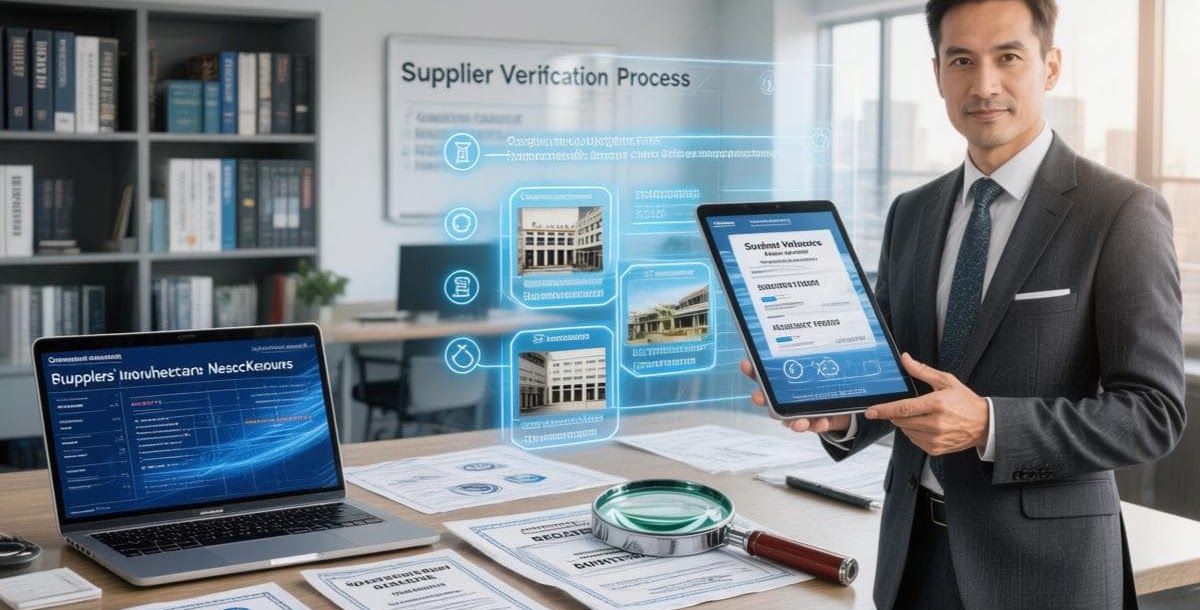
For anything beyond a test order, verify the company through official registration records and, ideally, an on-site or third-party audit. Our step-by-step supplier verification process covers exactly how we do this for clients.
Step 3: Solve the Payment Problem
You have three practical routes in 2026, in ascending order of reliability:
- International Alipay or cross-border payment partners: workable for small orders, with per-transaction limits and roughly 0.8–1% in fees. Fine for samples and trial orders.
- 1688's cross-border section (跨境专供): suppliers here are set up for international payment and sometimes export handling, but selection is narrower and prices sit slightly above domestic listings.
- A China-based sourcing agent purchases on your behalf using local payment rails, then consolidates and ships. This remains how the majority of serious overseas buyers actually access 1688, because it also solves vetting, quality control, and export in one motion.
One rule regardless of route: never pay a 1688 supplier via an off-platform personal transfer for a first order. If a deal requires leaving the platform's payment flow before trust is established, walk away.
Step 4: Get Your Goods Out of China
The standard playbook is to ship your 1688 orders to a consolidation warehouse in China (Guangzhou, Shenzhen, and Yiwu are the common hubs), where goods from multiple suppliers are inspected, repacked, and combined into one export shipment. From there, a freight forwarder handles export customs and international freight by sea, air, or rail. If you don't already have a consolidation partner, Easy China Warehouse (easychinawarehouse.com) is a reliable option we recommend for receiving, inspecting, and consolidating 1688 orders before export.
This consolidation step is where most of the hidden value lives: it's your last chance to catch wrong quantities, damaged goods, or off-spec products while returning them to the supplier is still cheap and fast. Skipping inspection at the warehouse to save a few days is the most expensive shortcut in the whole process.
When Does a Sourcing Agent Make More Sense?
Run the math. An agent typically charges 5–10% of order value. If 1688 saves you 25–35% versus Alibaba pricing, you still come out 15–30% ahead after the agent fee — and you get Mandarin negotiation, supplier vetting, quality inspection, consolidation, and export documentation included. For orders above roughly $2,000–$3,000, or any order where a quality failure would hurt, the DIY route rarely survives a cost-benefit analysis.
There's another advantage that doesn't show up in any price comparison: a local agent can physically visit the factory. This matters more than most buyers realize — a large share of 1688 shops that present themselves as manufacturers are actually trading companies renting a polished storefront. Photos, licenses, and even video calls can be staged; an on-site visit cannot. When we audit a 1688 supplier for a client, we walk the production floor, count the machines, check raw-material inventory against claimed capacity, and talk to the workers. That single visit has exposed more fake 'factories' than any document check ever has.
Where DIY does make sense: samples, very small trial orders, and buyers with China-based staff or partners who can receive and inspect goods locally.
5 Mistakes First-Time 1688 Buyers Make
- Chasing the lowest listed price. On 1688, the cheapest listing for a product photo is often a different material or grade entirely. Specs first, price second.
- Assuming 'factory' in the shop name means factory. Verify the business license scope actually includes manufacturing (生产), not just trading (贸易).
- Skipping the sample. A $30 sample has saved our clients from five-figure mistakes more times than we can count.
- Ignoring domestic reviews. 1688's domestic buyers are brutally honest in reviews — translate them before you commit.
- Forgetting export compliance. A domestic-market product may lack the certifications (CE, CPC, FDA) your market requires. Confirm compliance capability before you fall in love with a price.
The Bottom Line
1688.com is the closest thing to buying at China's factory gate, and the 20–40% price advantage over Alibaba is real. The platform's barriers — language, payment, and shipping — are also real, but every one of them has a proven workaround in 2026. Start with samples and small trial orders, build your vetting discipline, and bring in professional support the moment order values justify it. The buyers who win on 1688 aren't the ones who avoid the friction; they're the ones who systematize around it.